01
Wander our galleries
Explore a collection of pieces curated by our team of art historians from Oxford University, Sotheby’s and Christie’s. From Monet to Titian to Hokusai, each piece is chosen for its meditative depth and unique message.

Go beyond mindfulness.
Into a deeper Heartfulness.
The primer and transition are free to try. The meditation itself lives in Heartful, arriving soon.
Join the waitlist49% lower dementia incidence among people who visit museums every few months or more.
The study ↗
Scans measured the brains of individuals while they were shown images of paintings. According to the brain scans, “when you look at art… the blood flow increased for a beautiful painting just as it increases when you look at somebody you love.” Cortisol levels immediately drop, and pleasure sensations measurably increase.
Semir Zeki, French-British Neuroscientist & Professor of Neuroaesthetics at UCL
Ishizu, T. & Zeki, S. (2011). Toward a brain-based theory of beauty. PLoS ONE 6(7).
Zeki, S. (1999). Inner Vision: An Exploration of Art and the Brain. Oxford University Press.
The portal to history’s great masterpieces is in your pocket
Explore a collection of pieces curated by our team of art historians from Oxford University, Sotheby’s and Christie’s. From Monet to Titian to Hokusai, each piece is chosen for its meditative depth and unique message.
A short primer reveals hidden details and stories about the artwork. Offered as guided, bite-sized enrichments, curated knowledge opens the door to the full experience. You get to know the space and story, just before you enter it.
The sights and sounds of the painting come alive, and you are led into an immersive guided meditation. Bask in the artwork’s unique story and sensation. The gems you find in this little world are yours to keep.
Art is human stories. It is empathy. Works made by real people trying to express real feelings, emotions, and experiences. By curating you a personalised selection of artworks, our immersive meditations have the unique capacity to understand you on a profound level. It taps into a universal human experience. Through art, we introduce a narrative variety and emotional depth unseen in traditional mindfulness.
Join the waitlist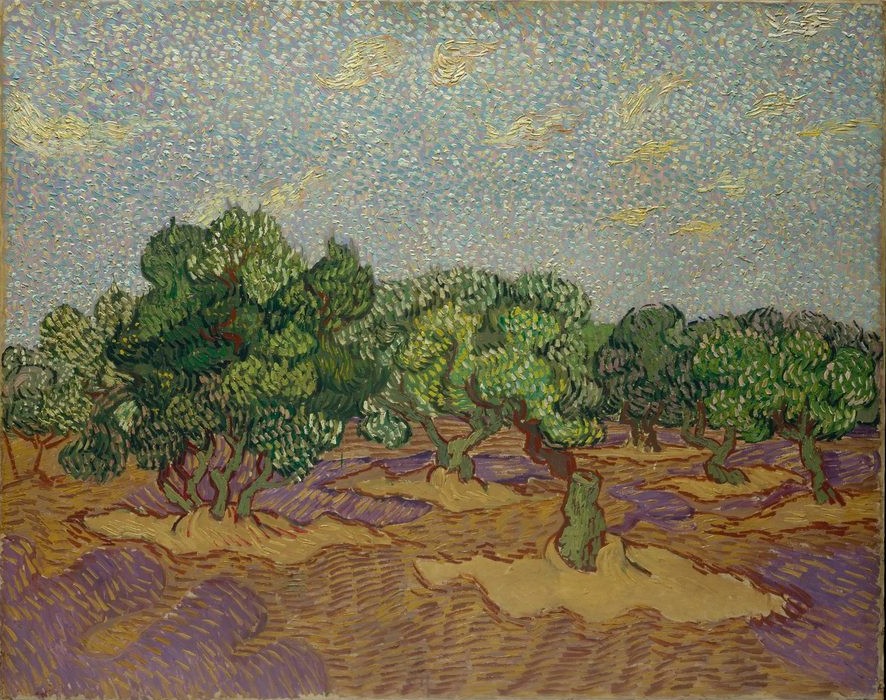
Look at Vincent van Gogh, who channelled his depression into beauty.
Van Gogh · Olive Trees, 1889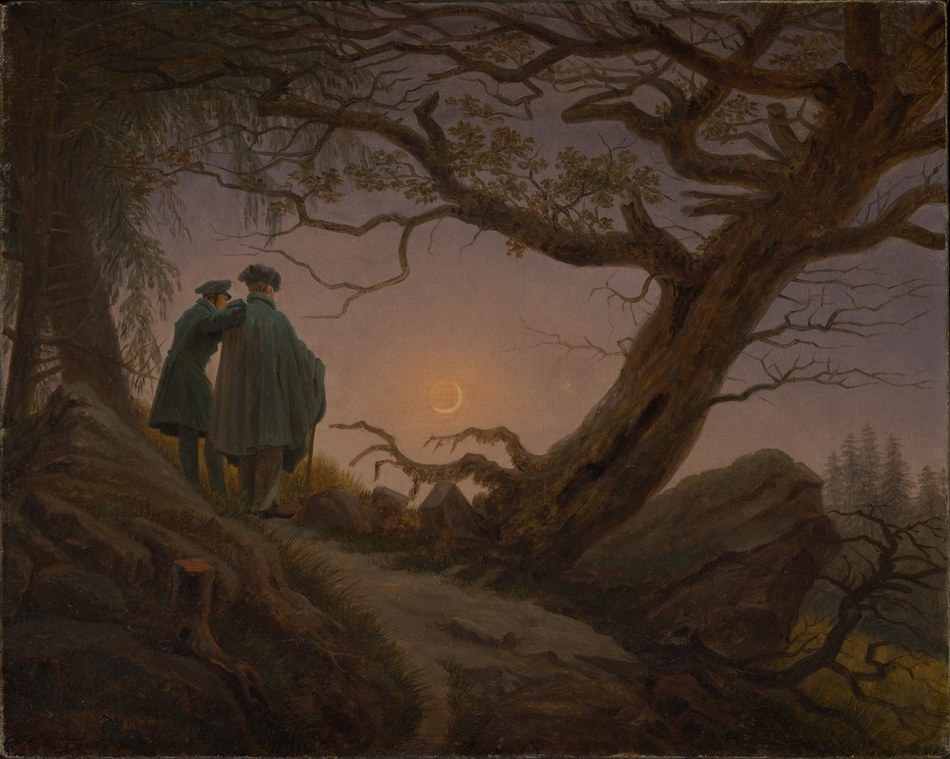
Caspar David Friedrich painted Two Men Contemplating the Moon when he lost his young apprentice. A reminder that those you love are always with you.
Friedrich · c. 1825–30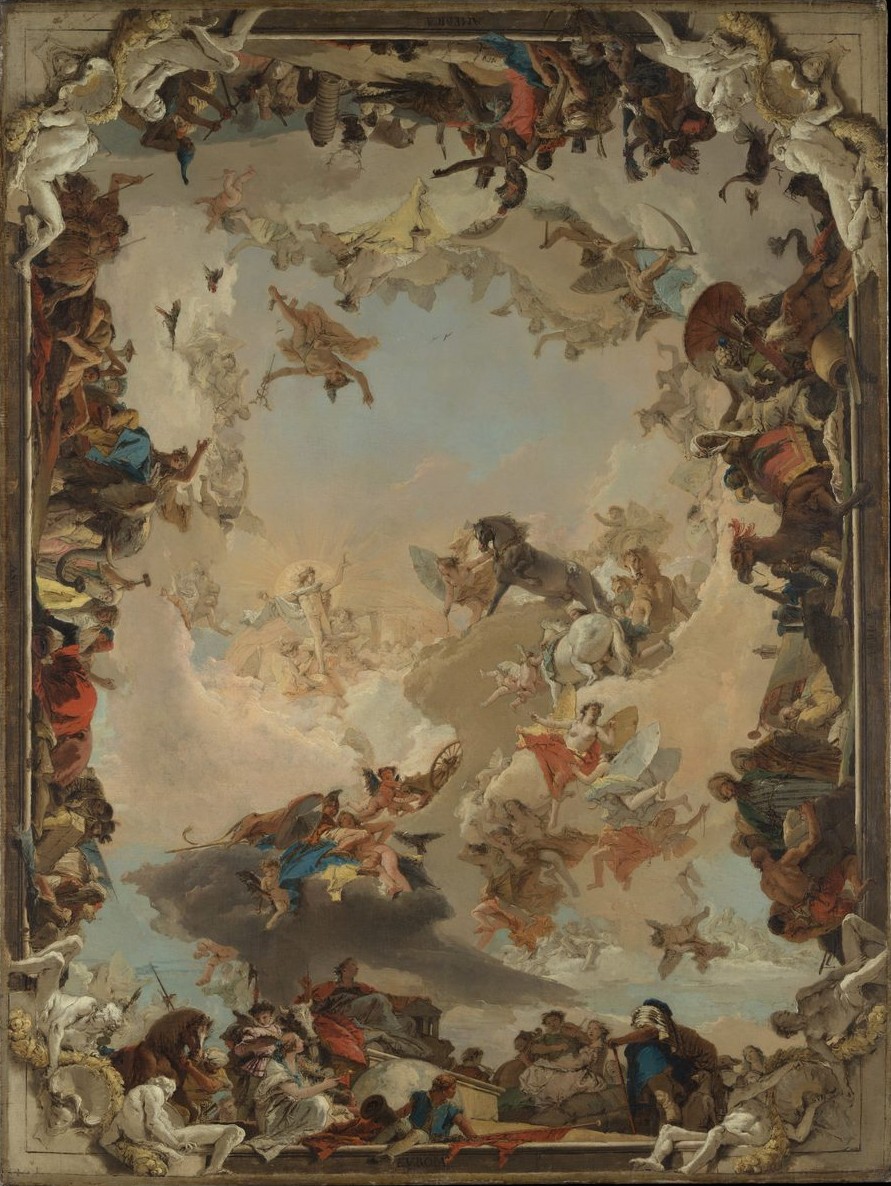
One thinks of Tiepolo, who never stopped inventing exciting ways to show traditional subjects. A Venetian trail-blazer.
Tiepolo · Allegory of the Planets and Continents, 1752